
Late updated: 30 Dec 2025 13:12
Written by: Elena Prescott
Exploring The Rich History Of British Locksmithing: A Journey Through Time
British locksmithing holds a fascinating allure. Its evolution from ancient wooden locks to the intricate designs of today exemplifies ingenuity and adaptation. Our journey explores the origins rooted in the Egyptian pin tumbler systems and uncovers how these have influenced the locks used in the United Kingdom over the centuries. This rich history offers insights into how locksmiths have both responded to and shaped societal changes.
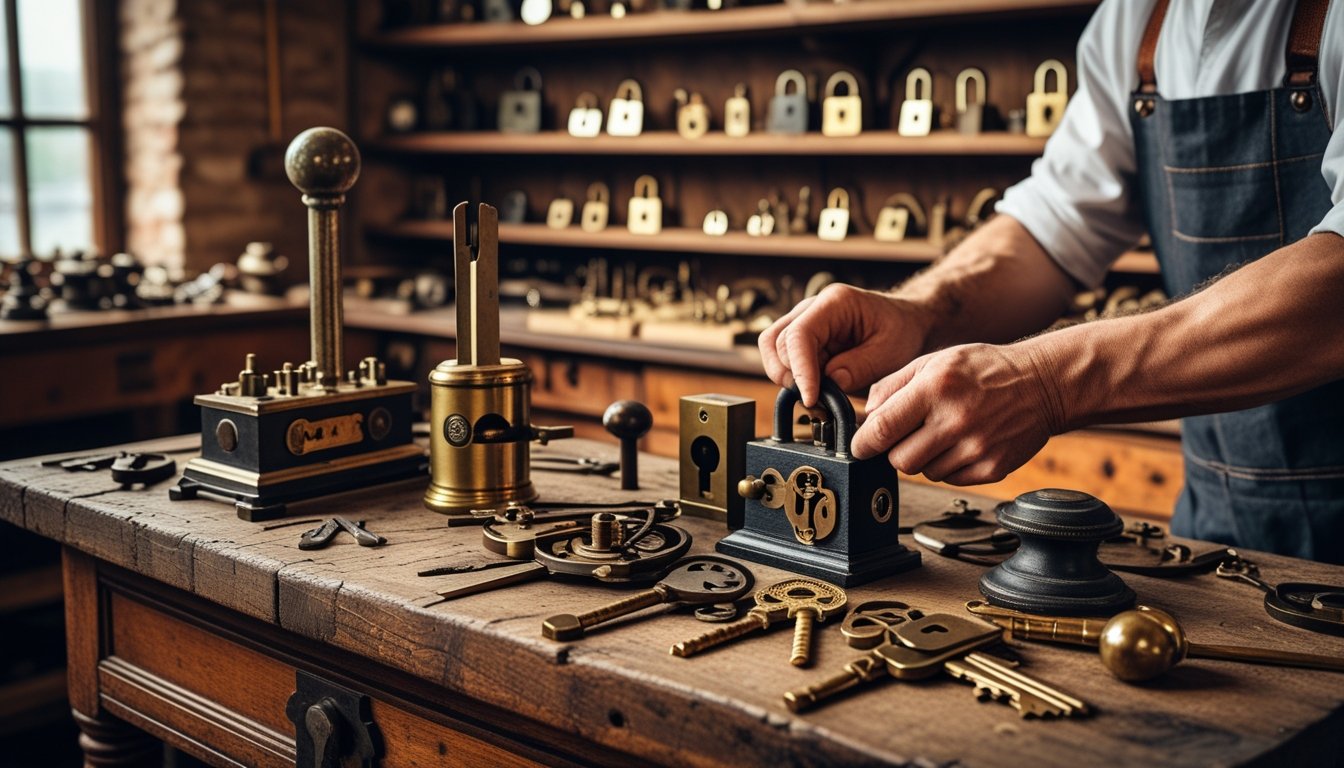
Through different eras, especially during the Victorian period, the industry experienced significant growth. The town of Willenhall emerged as a pivotal centre of lock manufacturing, reflecting the technological advancements and societal demands of the time. These developments were not just about practicality; they showcased craftsmanship that is both functional and beautiful. We delve into these transitions and how they paved the way for modern security solutions.
Today, British locksmithing blends tradition with innovation, navigating the balance between mechanical reliability and the sophistication of electronic systems. We explore how current locksmiths build upon this enduring legacy and consider future challenges in security. This holds particular relevance in an age increasingly defined by digital risks and technological advancement.
Key Takeaways
- British locksmithing evolved from ancient wooden mechanisms.
- The Victorian era was pivotal in industrial growth for the lock industry.
- Modern locksmiths blend tradition with digital innovation.
Foundations and Evolution of British Locksmithing
Locksmithing in Britain is a narrative woven through centuries, highlighting the journey from primitive wooden locks to intricate metal mechanisms. This evolution was marked by significant innovations and influential figures in the locksmithing craft.
Origins of Locks and Early Wooden Mechanisms
The story of British locksmithing begins with the rudimentary use of wooden locks, which were prevalent in ancient times. These early locks, crafted from readily available materials like wood, were simple pin devices, designed primarily for basic security needs. Wooden locks were pivotal in early societies, reflecting the beginnings of our need for privacy and protection.
Such mechanisms were especially common in ancient Rome and Egypt, indicating how indispensable the idea of security was to various civilizations. Despite their simplicity, these locks paved the way for more complex designs. Their functional essence lay in the wooden pin and groove systems, securing doors and storage spaces against easy intrusion.
Transition to Metal Locks and Craftsmanship
As societal advances demanded fortified security measures, the transition from wooden to metal locks marked a significant turning point. This leap was accompanied by a refinement in craftsmanship, as blacksmiths began specialising in lock making. Metal locks offered enhanced security and durability, embedding themselves into the architecture of upper echelon homes and public buildings.
Locks became more than mere security devices; they were also artistic expressions, with decorative designs and intricate patterns becoming a hallmark. Antique locks from this era often featured complex engravings, showcasing the skill of craftsmen like Robert Barron, who introduced the influential double-acting tumbler lock in 1778. This period set the standard for the robust locks that followed, blending functionality with beauty.
Pioneering Innovators and Landmark Inventions
The landscape of British locksmithing shifted dramatically with the contributions of insightful inventors. Figures like Joseph Bramah and Jeremiah Chubb were at the forefront of these movements. Bramah's Bramah Lock, patented in 1784, was known for its resistance to lock picking, a testament to his engineering ingenuity. Similarly, Chubb's Chubb Detector Lock in 1818 introduced a new layer of security by alerting users to tampering attempts.
Robert Barron's advancement with the double-acting tumbler lock was a watershed moment, igniting an era of innovation and inspiring further developments in lock security and technology. These inventors not only crafted locks but laid the foundation for modern security standards, influencing the direction of locksmithing across Britain and beyond.
Development of Complex Lock Mechanisms
With the foundation laid by early pioneers, the development of lock mechanisms advanced swiftly. Lever tumbler locks, evolved from Barron's original design, became a staple in safes and secure locations by adding layers of complexity to traditional lock structures. The introduction of combination locks and Yale's pin-tumbler mechanism spoke to the ongoing demand for heightened security and adaptability.
Linus Yale Jr.'s 1861 invention of the pin-tumbler lock revolutionised personal security, reinforcing its widespread adoption in residential applications. As technology progressed, locks continued to evolve, with James Sargent introducing time locks and Linus Yale Jr. crafting the unpickable bank lock, further cementing locksmiths' crucial role in societal development.
These advancements underscore our unyielding pursuit of mastering lock technology, blending innovation with timeless craftsmanship to secure our environments. The story of British locksmithing is indeed one of continuous adaptation and artistic innovation, revealing a rich history interwoven with the necessities of security.
Modern British Locksmithing and the Future of Security

Modern British locksmithing is a dynamic field, integrating traditional skills with cutting-edge technology. Our focus lies on professional services, advancements in lock technology, and sophisticated security systems. Each plays a crucial role in shaping a safer and more secure society.
Professional Locksmithing Services and Associations
In the bustling world of locks and keys, certified locksmiths provide essential services that ensure security and peace of mind. The Master Locksmiths Association (MLA) stands as a cornerstone of professionalism, offering accreditation and setting standards for quality and expertise across the UK. We rely on their guidelines to trust locksmiths with complex tasks such as lock installation, maintenance, and security audits.
Professional locksmiths handle everything from traditional lock repairs to installation of high-tech security solutions. Being part of the MLA not only signifies trust but also showcases a commitment to ongoing education in the locksmithing craft. These associations support locksmith services in maintaining the integrity and effectiveness of the industry's countless offerings.
Advancements in Electronic and Smart Locks
The evolution of lock technology has brought about significant advancements in security. Electronic locks, such as keypads and card readers, have transformed traditional access control methods into seamless, user-friendly interfaces. We see these technologies increasingly employed in both residential and commercial settings, offering enhanced security without the hassle of traditional keys.
Smart locks are leading the charge toward a digital future. Equipped with features like remote access via smartphones or integration with home automation systems, smart locks offer unparalleled convenience and security. Biometrics, once science fiction, have entered reality with fingerprint and retina scanning technologies that further elevate our security measures, making them both personal and highly secure.
Contemporary Access Control and Security Systems
Modern access control systems encompass a wide array of tools, ensuring both security and ease of use. From the simplicity of code-based entry systems to the sophistication of biometric verification, these systems reflect our adaptation to technological advancements. The ability to control access remotely via mobile apps enhances flexibility and monitoring efficiency in real time.
In the current landscape, security systems are intertwined with our digital lives, offering us robust alternatives to old mechanical locks. We see a move towards integrated systems that merge traditional locksmithing with advanced electronic solutions. These developments position us well for future security challenges, ensuring that our premises remain secure in an ever-evolving technological environment.
Frequently Asked Questions

In our exploration of British locksmithing, we examine its ancient roots and medieval evolution, assess impacts from historical periods like the Industrial Revolution, and consider modern technological influences. These insights highlight the pivotal role played by renowned locksmiths in shaping the craft and setting security standards.
What are the origins of locksmithing in Britain?
Locksmithing in Britain can be traced back to the use of wooden locks and keys by ancient civilisations. These mechanisms, while simple, laid the groundwork for more complex designs. Evidence of Roman influences suggests the incorporation of metal locks, showcasing early signs of technical advancement.
How did the profession of locksmithing evolve during the medieval period in England?
During the medieval period, locksmithing underwent significant innovations as metalworking techniques improved. The complexity and craftsmanship of locks increased substantially, moving towards intricate designs that included wards and innovative locking mechanisms. This period also saw locksmiths gaining prominence as skilled artisans within the guild system.
What impact did the Industrial Revolution have on the development of locks and keys?
The Industrial Revolution brought about transformative changes in lock manufacturing, with mass production becoming feasible. This era introduced standardised parts, leading to the widespread availability of reliable and affordable locks. Enhanced machining techniques allowed for increased precision, leading to more secure locking systems.
Who were some notable British locksmiths and what contributions did they make to the craft?
Figures like Robert Barron and Joseph Bramah stand out in the annals of British locksmithing. Barron's double-acting tumbler lock and Bramah’s high-security lock were revolutionary, challenging previous designs with their complexity and resilience. Such contributions cemented Britain’s role as a leader in lock innovation.
How have modern technological advancements influenced the practice of locksmithing in the UK?
Today, locksmithing in the UK is at the forefront of embracing technological advancements. The introduction of electronic and smart locks has broadened the scope of the profession beyond traditional mechanical systems. These innovations reflect a shift towards integrating digital technology with traditional security practices.
What role did British locksmithing play in the establishment of security standards and regulations?
British locksmithing set benchmarks in security through the development of rigorous standards and regulations. These measures included implementing testing and certification processes to ensure products meet high-security requirements. Such standards have helped maintain trust and reliability in locksmith services throughout the nation.